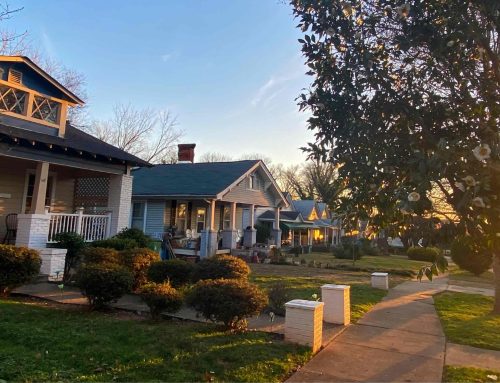
Charlotte’s rental market keeps growing. Population inflows from the Northeast and Midwest, a diversified job base anchored by finance, healthcare, and technology, and a persistent housing shortage across Mecklenburg and surrounding counties have pushed rental demand to levels that make buy-and-hold investing genuinely compelling. The challenge for many investors is not finding the right property. It is qualifying for the loan.
Conventional investment property mortgages require two years of tax returns, W-2s, full debt-to-income calculations, and a cap on the number of financed properties you can hold. For a self-employed investor, an LLC owner, or anyone scaling a portfolio beyond a handful of units, those requirements create a wall that gets harder to clear with each new acquisition.
DSCR loans remove that wall. Qualification is based on what the property earns, not what you earn. If the rental income covers the mortgage payment, you have a path to financing regardless of your personal income structure.
Key takeaway: A DSCR loan qualifies your rental property on its own cash flow. Your W-2, tax returns, and personal debt load are not part of the underwriting equation.
This guide covers how DSCR loans work in the Charlotte market specifically, including how the ratio is calculated, what lenders look for in rental income, down payment expectations, LLC ownership, documentation requirements, and the property types worth evaluating across the metro.
How DSCR Is Calculated
The Debt Service Coverage Ratio is a single number that tells a lender whether a property’s rental income is sufficient to cover its monthly obligations. The formula is straightforward:
DSCR = Monthly Gross Rent ÷ Monthly PITIA
PITIA stands for Principal, Interest, Taxes, Insurance, and any HOA dues. Every one of those line items factors into the denominator. A ratio of 1.0 means the rent covers the payment exactly. A ratio above 1.0 means there is income to spare. A ratio below 1.0 means the property runs at a deficit relative to its debt obligations.
What the Numbers Mean in Practice
| DSCR | What It Signals | Typical Lender Response |
| 1.25+ | Strong cash flow, 25% cushion above payment | Best rate tiers, easiest approval |
| 1.0 – 1.24 | Property breaks even or slightly positive | Standard approval, standard pricing |
| 0.75 – 0.99 | Property runs at a cash-flow deficit | Some lenders approve with larger down payment or reserves |
| Below 0.75 | Significant deficit | Most programs decline; specialized lenders only |
Most Charlotte lenders target a minimum DSCR of 1.0 to 1.25. Borrowers with a 740+ credit score, 25% or more down, and a DSCR above 1.25 qualify for the best available pricing. Each step down in credit score, down payment, or ratio moves the file into higher rate tiers.
A Worked Example
Consider a single-family rental in the Steele Creek area of Charlotte purchased at $380,000.
- Down payment (20%): $76,000
- Loan amount: $304,000
- Estimated monthly principal and interest (at 7.25%, 30-year fixed): approximately $2,074
- Monthly property taxes (Mecklenburg County, ~1.0% effective rate): approximately $317
- Monthly insurance: approximately $120
- HOA: $0 (no HOA)
- Total PITIA: approximately $2,511
The appraiser’s market rent schedule shows comparable rentals in the area at $2,700 per month.
DSCR = $2,700 ÷ $2,511 = 1.08
A 1.08 DSCR clears the standard 1.0 threshold. The property qualifies on its own cash flow, and the investor does not need to show a single pay stub or tax return to get there.
What changes the math: If the appraiser’s rent schedule came back at $2,400 instead, the DSCR would drop to 0.96, falling below the standard minimum. At that point, the investor would need to bring a larger down payment, find a lender with a sub-1.0 program, or reconsider the purchase price.
How Rental Income Is Determined
The rent figure used in the DSCR calculation does not come from the investor. It comes from the appraiser’s market rent schedule, which is part of the standard appraisal report. This distinction matters more than most investors realize.
On a vacant property, the lender uses the appraiser’s estimated market rent. On a tenanted property, the lender typically uses the lower of the current lease amount and the appraiser’s market rent estimate. If a tenant is paying above-market rent, the lender will not underwrite that premium.
Why You Should Know the Rent Number Before You Write the Offer
The appraiser’s rent schedule is the single most important document in a DSCR file. An investor who underwrites a deal based on their own rent estimate and then discovers the appraiser’s number is $200 to $300 lower can find the deal falling apart at the finish line.
A practical step: before submitting an offer, pull recent lease comps for the neighborhood. Resources like Zillow Rental Manager and local property management companies can give you a realistic range. If your target rent is in line with the market, the appraiser’s number should confirm it.
Short-Term Rental Income
Some DSCR programs in Charlotte accept short-term rental income for properties intended to run on platforms like Airbnb or VRBO. Documentation typically includes a rental history from the platform or a market analysis from a service like AirDNA. Not every lender accepts this income type, and some that do will apply a haircut to the projected figures.
The rule of thumb: tell your loan officer how you plan to operate the property before underwriting begins, not after. Switching income documentation mid-process creates delays and can change which lender is the right fit for the file.
Down Payment Expectations
Most DSCR purchase loans in Charlotte require a minimum down payment of 20% to 25% of the purchase price. That translates to a maximum loan-to-value ratio of 75% to 80%. For a $380,000 property, the investor needs between $76,000 and $95,000 at the table before closing costs.
A few programs allow 15% down (85% LTV) for borrowers with strong credit and a DSCR above 1.25, but those files carry higher rates that can compress the property’s cash flow. For most investors, 20% is the practical starting point.
Key rules on down payment funds:
- Funds must come from verified, documented sources (bank statements, retirement accounts, proceeds from a property sale)
- Seller concessions cannot be applied toward the down payment on investment properties
- Gift funds are generally not permitted on DSCR investment loans
- Reserves after closing are also required, typically 3 to 6 months of PITIA, depending on the program
For cash-out refinances, lenders typically require the investor to maintain 25% to 30% equity in the property after the refinance closes. This is an important consideration for investors who plan to pull equity from an existing rental to fund the next acquisition.
Closing in an LLC
One of the most practical advantages of DSCR financing is the ability to close the loan in the name of a limited liability company. Conventional investment property loans require the borrower to take title personally. DSCR programs frequently allow LLC ownership, which is the primary reason serious portfolio investors move away from conventional financing as they scale.
Why Investors Use LLCs for Rental Properties
Holding rental properties inside an LLC creates a structural separation between personal assets and investment liabilities. If a tenant files a lawsuit related to the property, the claim is directed at the LLC rather than the investor’s personal balance sheet. It also simplifies bookkeeping, tax preparation, and eventual estate planning as the portfolio grows.
From a lending standpoint, the LLC requirements are straightforward:
- The LLC must be in good standing with the state of North Carolina or South Carolina
- The borrower must be a member or manager of the LLC
- Most lenders require a personal guarantee from the borrower even when the loan closes in the LLC’s name
- Articles of organization and an operating agreement are standard documentation requests
The personal guarantee requirement means the investor’s credit score still matters. A minimum score of 620 is a common floor, with 680 or higher needed for best pricing. But personal income, employment history, and debt-to-income ratio are still not part of the underwriting calculation.
Portfolio Scaling Without Conventional Limits
Conventional guidelines cap the number of financed properties an investor can hold, typically at ten. Several DSCR lenders impose no such limit. Each new property qualifies on its own cash flow, which means an investor can continue acquiring rentals across Charlotte without each new purchase triggering a full re-qualification of their personal finances. For investors with a clear growth strategy, that flexibility is significant.
Common Documentation Requirements
DSCR loans are often described as “no-doc” loans, which is not quite accurate. The documentation list is significantly shorter than a conventional mortgage, but a DSCR file still requires specific items. Knowing what to gather before applying keeps the process moving.
What a DSCR file does NOT require:
- Personal tax returns (W-2s, 1040s, Schedule E)
- Pay stubs or employment verification letters
- Debt-to-income ratio calculation
- Employer contact information
What a DSCR file DOES require:
| Document | Purpose |
| Credit report | Verify minimum score (620+) and credit history |
| Property appraisal with rent schedule | Establish market value and qualifying rent figure |
| Current lease (if tenanted) | Document actual rent being collected |
| Bank statements (2–3 months) | Verify down payment funds and post-closing reserves |
| LLC articles of organization + operating agreement | Required when closing in an entity |
| Entity authorization resolution | Confirms the signatory has authority to bind the LLC |
| Homeowner’s insurance binder | Required before closing |
| Title commitment | Standard for all real estate transactions |
The appraisal with rent schedule is the document that drives the entire file. Everything else is administrative. If the appraiser’s rent number supports the DSCR, the loan moves forward. If it does not, no amount of other documentation changes the outcome.
One note on reserves: lenders want to see that the investor has cash remaining after the down payment and closing costs are paid. Depleting savings entirely to close the deal is a common reason files get conditioned or declined at the last stage of underwriting.
Property Types Worth Evaluating in the Charlotte Market
DSCR loans are available across a range of property types. Not every type performs equally well in the Charlotte metro, and the financing terms can vary depending on the asset class.
Single-Family Rentals (1 Unit)
The most straightforward DSCR file. Single-family homes in Charlotte’s suburban corridors, including Steele Creek, University City, Concord, and Gastonia, offer strong rent-to-price ratios relative to the urban core. Maximum LTV is typically 75% to 80% on purchase. These properties attract long-term tenants and carry predictable vacancy rates.
2 to 4 Unit Properties (Small Multifamily)
Duplexes, triplexes, and fourplexes qualify under DSCR programs, though maximum LTV typically drops to 70% to 75%, requiring a larger down payment. The income from multiple units can produce a stronger DSCR than a comparable single-family property, which can offset the higher equity requirement. Charlotte’s older neighborhoods, including NoDa, Belmont, and Villa Heights, have pockets of 2 to 4 unit inventory worth evaluating.
Condominiums
Condos qualify for DSCR financing, but lenders apply additional scrutiny to the HOA. A financially healthy HOA with adequate reserves and no pending special assessments is essential. High HOA dues can also compress the DSCR by increasing the monthly PITIA, so run the full calculation before making an offer.
Short-Term Rental Properties
As noted earlier, some DSCR programs accept short-term rental income. Charlotte’s proximity to major employers, sports venues, and the Charlotte Douglas International Airport creates consistent demand for short-term rentals in certain neighborhoods. The key is choosing a lender whose program supports this income type from the start. According to Bankrate, investors should also account for higher management costs and seasonal vacancy when stress-testing short-term rental cash flow.
What to Avoid
Properties with significant deferred maintenance, environmental issues, or title complications can create appraisal problems that affect the DSCR calculation and loan eligibility. Rural properties outside Mecklenburg, Gaston, Union, Cabarrus, Iredell, and York counties may fall outside some lenders’ coverage areas. Always confirm geographic eligibility before proceeding.
Is a DSCR Loan the Right Fit?
DSCR financing is not the right tool for every investor or every deal. It is the right tool when the property’s cash flow supports the payment and the investor’s income structure makes conventional qualification difficult or impractical.
A DSCR loan makes strong sense when:
- You are self-employed or have complex tax returns that understate income
- You want to hold the property in an LLC for liability protection
- You already hold multiple financed properties and are approaching conventional limits
- You want to close faster without the documentation drag of a full income verification process
- The property’s rent-to-price ratio is strong enough to clear a 1.0 DSCR or better
A conventional investment loan may still be the better choice if you have straightforward W-2 income, a low debt-to-income ratio, and are buying your first or second investment property. Conventional rates on investment properties are generally lower than DSCR rates, which currently run in the 7.0% to 8.5% range for most Charlotte borrowers depending on credit, down payment, and ratio.
The decision is not one-size-fits-all. The right loan depends on the specific property, the investor’s financial profile, and how the deal pencils out under both scenarios.
If you are evaluating a rental property in the Charlotte metro and want to understand whether a DSCR loan is the right structure for your situation, the team at Fairway of the Carolinas can walk you through the numbers. We work with investors across Mecklenburg, Gaston, Union, Cabarrus, Iredell, and York counties and can help you understand how a specific property would qualify before you commit to an offer. Connect with us today to get started.